

There is a moment that hovers over every Eastern European summer table: a steaming bowl is brought out, and at the very last second a generous handful of freshly chopped dill falls over it. Only then is the dish finished. Herbs are not an accessory or a decoration in this cuisine – they are its soul. In this article we introduce the most important ones, show you how to grow them yourself, and explain why a garden without dill is simply unthinkable in Eastern Europe.
Greenery Is Everything
Anyone who has been a guest in an Eastern European kitchen knows the picture: a bunch of dill, a bunch of parsley, often spring onions and coriander too, lying ready to hand on the worktop – not hidden in the fridge but present, ready for use at any moment. Fresh greenery is not added as a pretty garnish on top but in quantities that often surprise Western guests. It brings freshness, vitamins and that unmistakable flavour you can never achieve with dried herbs.
Dacha wisdom: «A cook without herbs is like a painter without colours.»
The best part: almost all these herbs are extremely low-maintenance and thrive equally well in the bed, the raised bed and the balcony box. Once you have scattered freshly harvested dill over boiled potatoes, you will never again buy the sad plastic bundles from the supermarket.
The Three Classics – and How to Grow Them
🌿 Dill – the King of Herbs
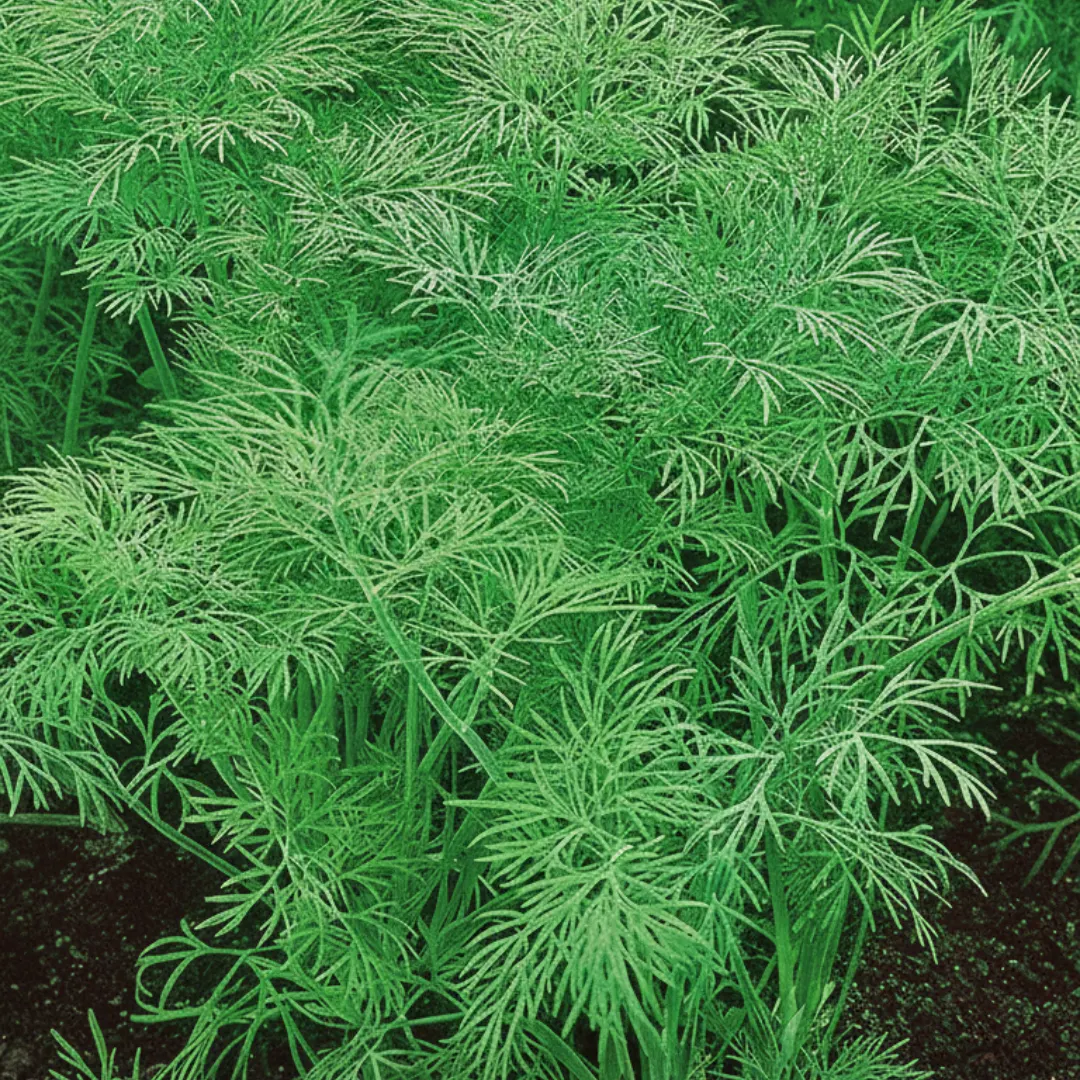
No herb is as inseparable from Eastern European cuisine as dill (ukrop). It belongs on boiled potatoes, in soups, with fish, in quark, in salad – and of course, in the form of its flower crowns, in the pickle jar with the salt cucumbers. In many families the pickle year is even planned so that enough dill grows for both herb and crowns.
- Dill Goldkrone – bolts especially late, providing tender, aromatic foliage for weeks. The first choice if leaves are your main aim.
- Dill Mammoth – vigorous and generous in forming crowns. Ideal if you pickle a lot and need the large flower umbels for fermenting.
Growing tip: Sow directly from April, then resow every 3–4 weeks – that way you always have fresh supplies from May to October. Dill likes sun and loose soil and is a perfect bed neighbour for carrots and cucumbers. The trick for double use: harvest some plants young for the herb, let the rest flower for the crowns.
🥒 How dill and cucumbers become crunchy salt pickles is in our fermentation guide for salt pickles.
🌿 Parsley – the Robust Companion
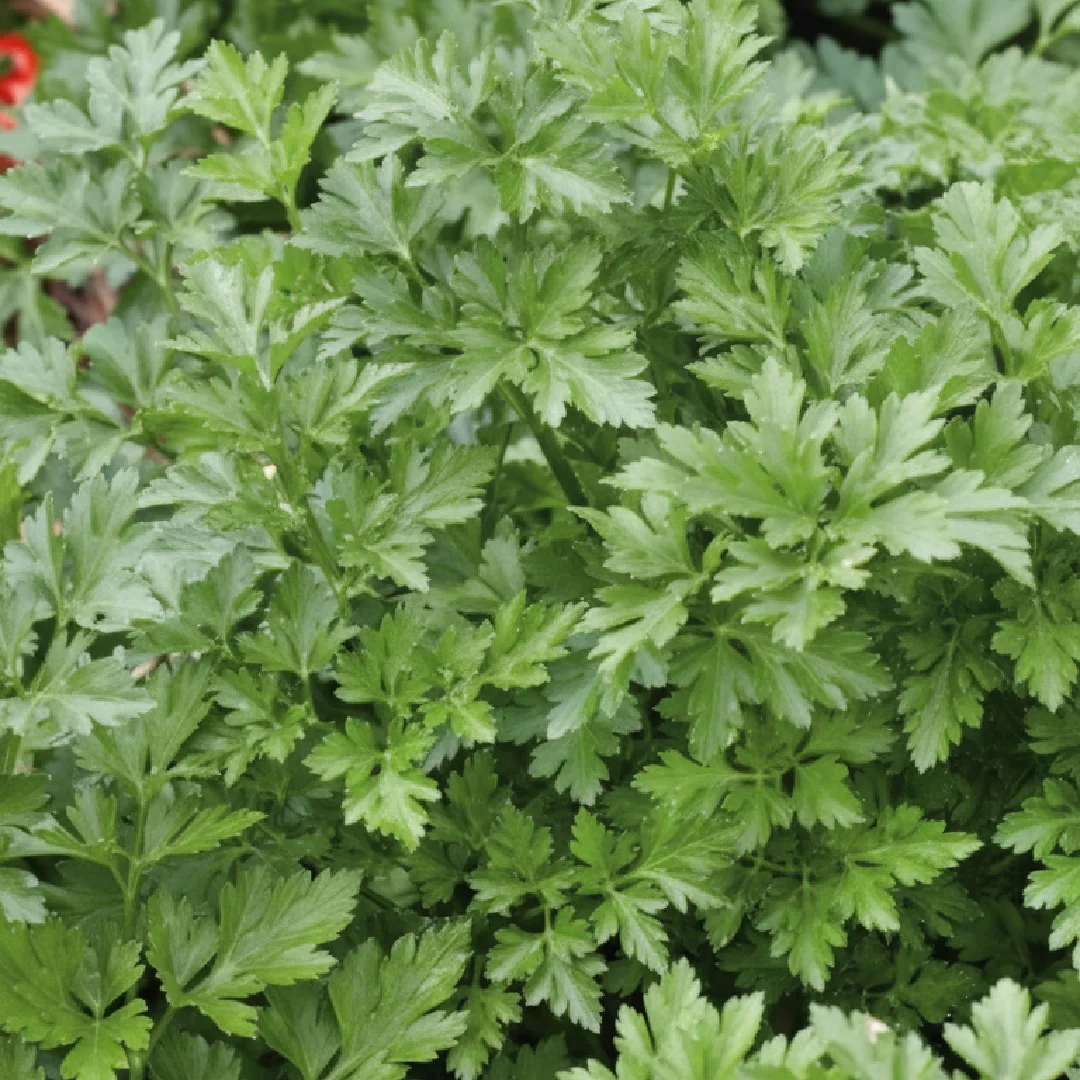
If dill is the king, parsley (petrushka) is the reliable right hand. It goes into almost every broth, into meat dishes, salads and soup greens. Unlike dill it is biennial and winter-hardy – plants overwintered in the bed provide the very first fresh harvest of the year in early spring, when hardly anything else is growing.
- Parsley Festival 68 – flat-leaf parsley with an intense aroma whose roots can even be used for soups and stews. Double yield from one sowing.
- Parsley Moss Curled 2 – the classic curly variety that keeps its aroma when dried and frozen. Ideal for the winter supply.
Growing tip: Parsley is a slow germinator – 3 to 4 weeks is completely normal. Soaking the seeds overnight in lukewarm water speeds up germination considerably. After that it is uncomplicated and rewarding. Sunny to partially shaded spot, evenly moist.
🍲 Parsley and dill are cornerstones of a good borscht. The whole dish – from history to recipe – is in the borscht guide.
🧅 The Supporting Cast: Spring Onion, Coriander & Garlic
Besides the two great classics, other aromatics round off Eastern European cuisine. Coriander (kinza) is indispensable especially in Caucasian and Central Asian cooking – for example as fresh greenery over a steaming plate of plov. Spring onions bring mild sharpness to salads and soups, and garlic is omnipresent anyway.
🍛 How coriander, garlic and carrots come together in a real Uzbek plov is shown in our plov guide.
Preserving Herbs: Freshness for the Winter
The summer is short, the appetite for fresh greenery lasts all year. Fortunately, herbs preserve wonderfully:
- Freezing: The simplest and most aroma-friendly method. Freeze chopped dill or parsley in ice-cube trays with a little water or oil – that way you have fresh greenery in portions for soups and sauces.
- Drying: Particularly suited to curly parsley, which keeps its aroma well. Hang in bundles in an airy, shady place.
- Pickling: Dill crowns go straight into the pickle jar. And a herb salt of dried greenery, salt and garlic is a wonderful gift from your own garden.
💡 Bed schedule for the herb year: March/April – sow parsley (slow germinator!) · April–July – resow dill in succession · summer – harvest continuously, let some dill flower · autumn – freeze, dry, make herb salt · winter – overwintered parsley provides the first early harvest.
A Bed Full of Aromas Begins With a Handful of Seeds
Whether scattered fresh over the borscht, as a crown in the pickle jar or as herb salt for the winter – the soul of Eastern European cuisine grows in your own bed. And it needs astonishingly little: some sun, loose soil and a few seed packets.
🌱 The herb bed to replant: Dill Goldkrone · Dill Mammoth · Parsley Festival 68 · Parsley Moss Curled 2 – all in our shop.
📖 Related from our blog
- 🥒 Fermenting crunchy salt pickles – where dill crowns become the star
- 🍲 Borscht: history & recipe – unthinkable without dill and parsley
- 🍛 Uzbek plov – with fresh greenery to serve
- 🥬 Kapusta – make your own sauerkraut – caraway & co. in the barrel


