

Harvesting your own watermelon – in a temperate climate? What many consider impossible works astonishingly reliably with the right variety and three simple rules. And it is worth it: a sun-warm, freshly cut melon from your own bed tastes more intense than anything the supermarket ships from overseas. In this guide we compare all four watermelons from our range and show you step by step how to succeed – from starting indoors to the famous knock test.
Which Watermelon Is Right for Me? The Quick Answer
- For beginners: Sugar Baby – the most forgiving classic since the 1950s
- For cool regions & uncertain summers: Rosario H – bred specifically for this
- For the wow effect when cutting: Janosik – green outside, luminous yellow inside
- For the eye-catcher in the bed: Złoto Wolicy – golden rind, red flesh
- For saving your own seed: Sugar Baby and Janosik (both open-pollinated)
- For the biggest fruits: Sugar Baby at 5–7 kg
The 4 Varieties in Portrait
1. Sugar Baby – the Classic for Your First Attempt
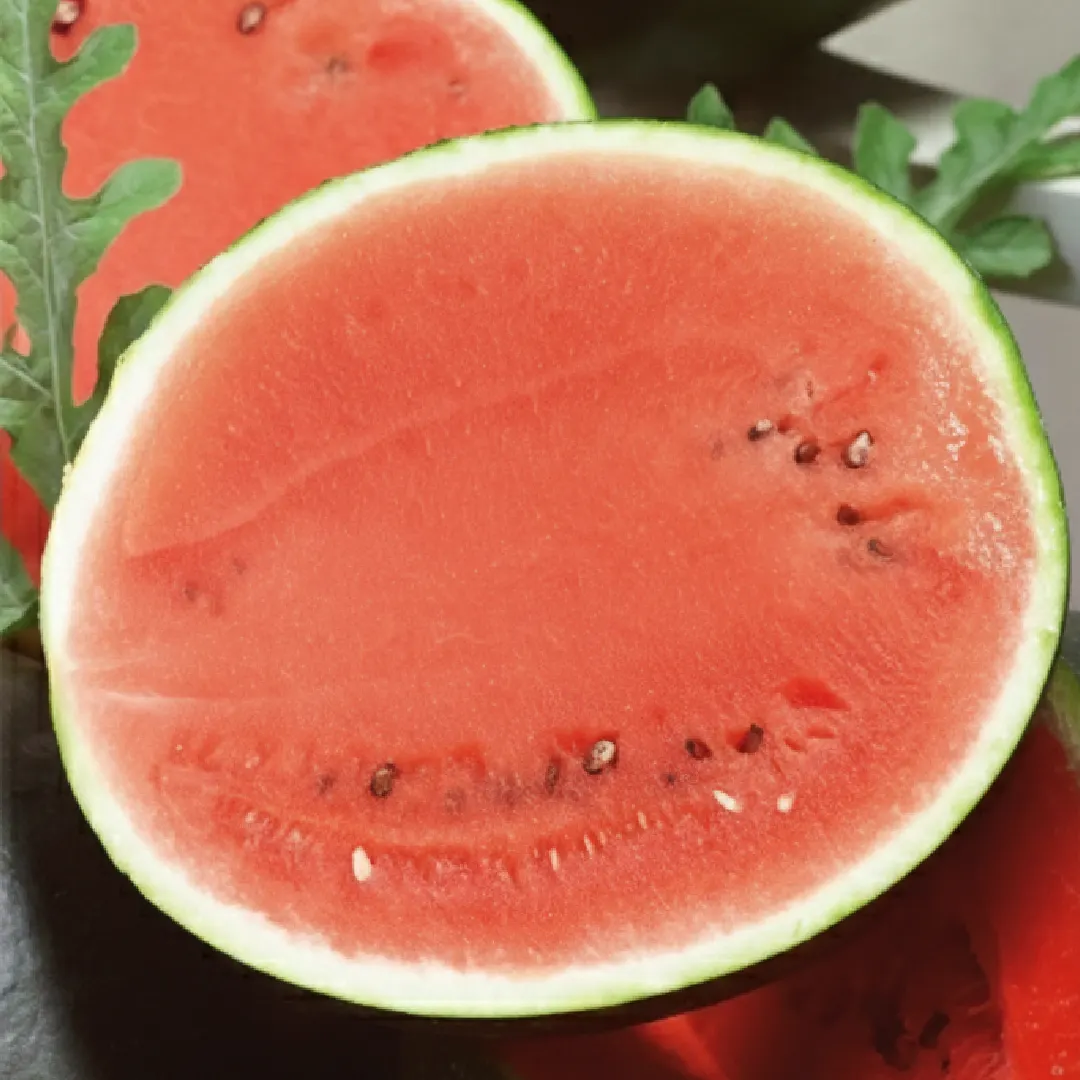
The most famous home-garden melon in the world since the 1950s – and still the benchmark. The name says it all: the deep red flesh is extremely sweet and juicy, the fruits reach a stately 5–7 kg. As an early variety, Sugar Baby ripens reliably even in temperate latitudes, in the greenhouse as well as outdoors. Hardly any melon forgives more beginner mistakes.
Who is it for? Beginners in the melon adventure and families. Open-pollinated – seed can be saved. Key facts: 5–7 kg · early · deep red flesh · greenhouse & open field
2. Rosario H – the Specialist for Cool Summers
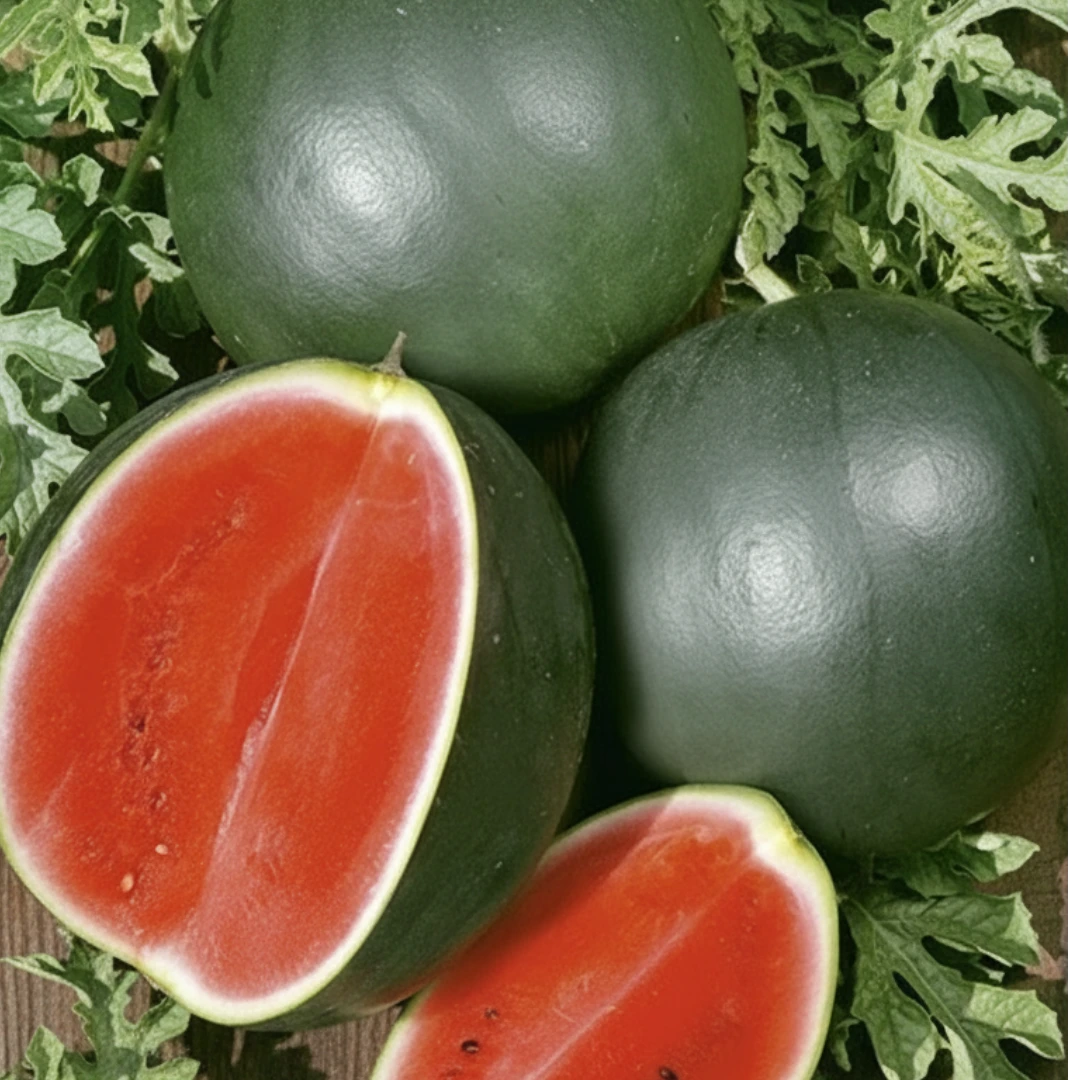
The answer to the most common melon question: «does this even work in our weather?» With Rosario H: yes. This early hybrid was developed specifically for less-than-optimal climate conditions and delivers high yields even in cooler weather – where other melons produce only vines without fruit. The handy 3–4 kg fruits have deep red, very juicy flesh.
Who is it for? Anyone north of the wine regions, higher elevations, safety-first growers. Key facts: F1 hybrid · 3–4 kg · early · crops reliably even in cool weather
3. Janosik – the Golden Surprise From Poland
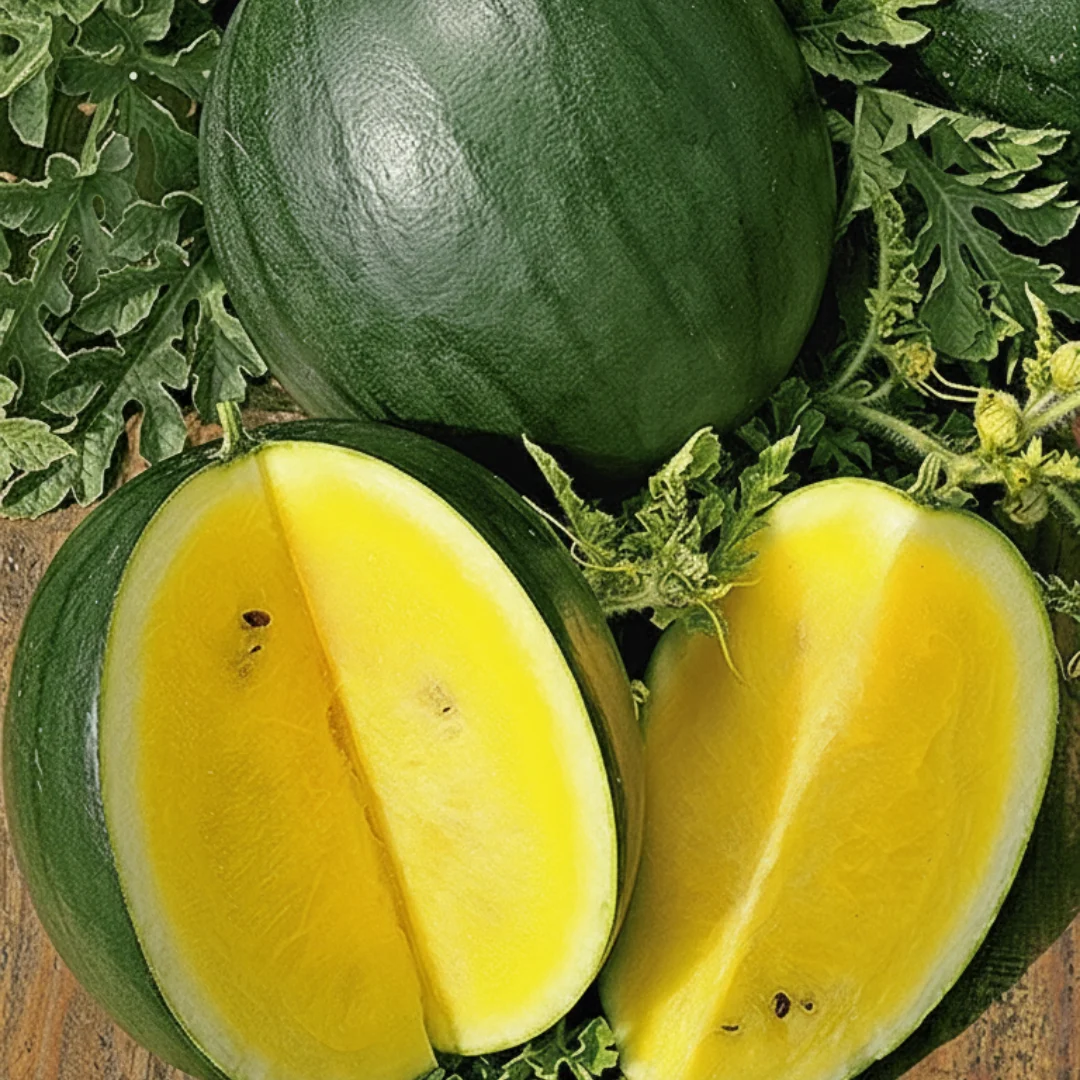
From the outside a perfectly normal green classic – but cutting it open brings the moment you grow this variety for: luminous yellow flesh, very juicy and remarkably sweet, with a fine honey note that red varieties simply do not have. This Polish breeding produces fruits of 3.5–5.5 kg – the perfect size for the home garden and the fridge.
Who is it for? Anyone who wants to amaze guests and children. Open-pollinated. Key facts: 3.5–5.5 kg · mid-early · yellow flesh with a honey note
4. Złoto Wolicy – the Gold of Wolica
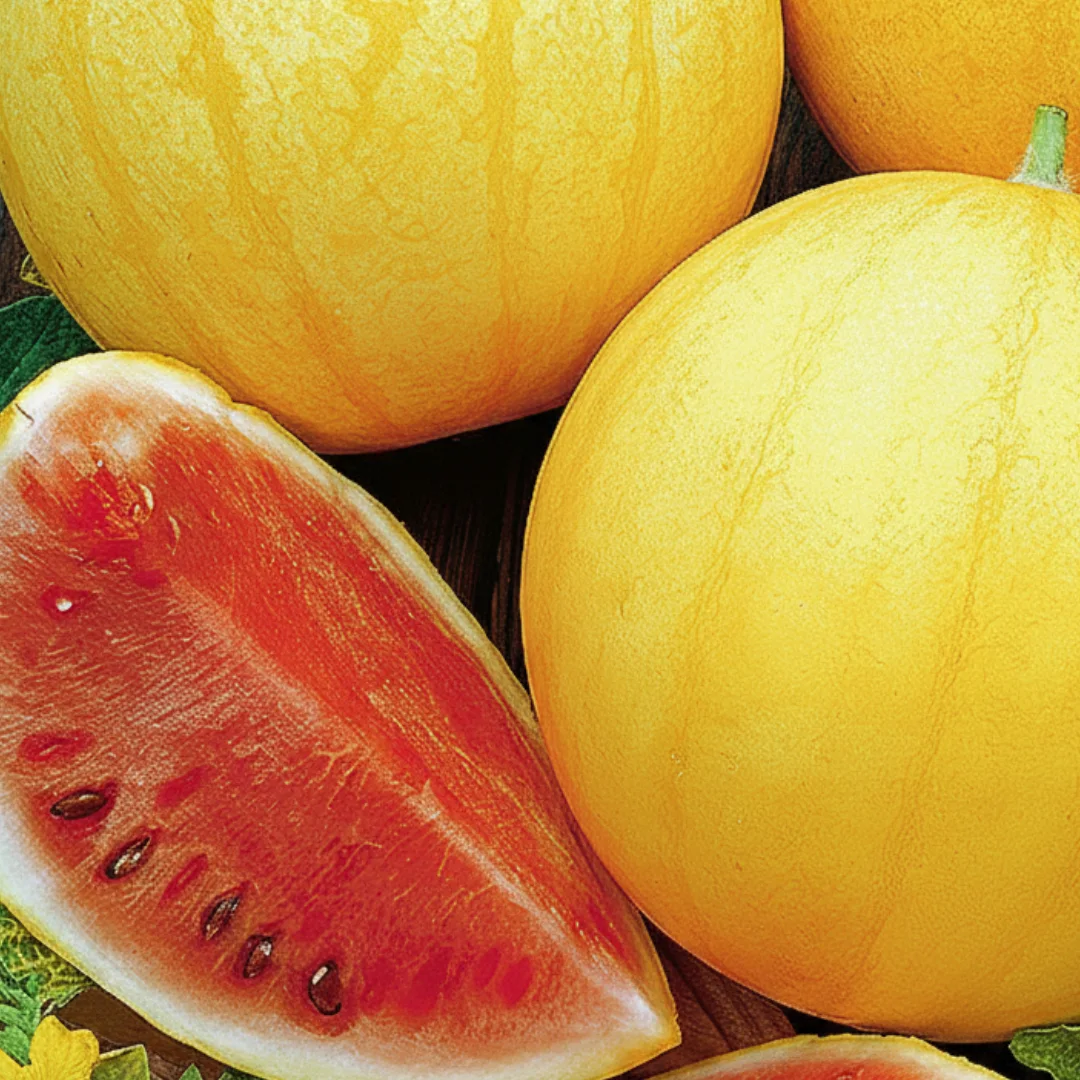
The reversed colour scheme: bright golden yellow outside, deep red and particularly sweet inside. A golden melon in the bed is an eye-catcher hardly any visitor can place – but this variety is more than show: the early Polish hybrid is highly resistant to both powdery and downy mildew, the two most common fungal diseases in the melon bed, and bears fruits of up to 6 kg.
Who is it for? Gardeners looking for something special without sacrificing yield security. Key facts: F1 hybrid · up to 6 kg · early · mildew-resistant · yellow rind, red flesh
Growing Watermelons: How to Succeed in a Temperate Climate
Do watermelons even grow in temperate climates?
Yes – with early varieties, indoor starting and a warm site, growing succeeds far into the north. The key is the warm window: watermelons need a warm summer from May to September. Early varieties like Rosario H or Sugar Baby use this short time optimally; in rough locations a greenhouse, polytunnel or black mulch film secures success.
When do you sow watermelons?
Late April, indoors – starting inside is essential. At 25–28 °C the seeds germinate in 6–14 days. Sowing directly into the bed loses too many weeks in a temperate climate. Do not start too early either: the plants grow fast and should be strong but not leggy at planting time.
When can watermelons go outside?
After the last frost from late May – and then the 15-degree rule applies: below 15 °C, watermelons stop growing entirely. The spot must be in full sun and wind-sheltered, with 100 × 100 cm spacing for the vines. Pro trick: black mulch film warms the soil noticeably faster and keeps weeds away.
How do you tell a watermelon is ripe?
By three signs: the tendril right at the fruit base has dried up, the ground spot (where the melon rests on the soil) has turned from white to yellowish – and when you knock, the fruit sounds dull and hollow instead of bright. Harvest in late summer, and always before the first frost.
Open-pollinated or F1 – which melon can I propagate?
Sugar Baby and Janosik are open-pollinated – from their seeds you can save true-to-type seed every year (wash seeds from a fully ripe fruit, dry, store dark). Rosario H and Złoto Wolicy are F1 hybrids: maximum growing security and resistances, but their seed segregates in the next generation.
💡 Bed schedule for the melon year: Late April – start indoors (25–28 °C) · Late May – plant out, lay mulch film · June–August – water generously, feed weekly from flowering · August–September – knock test, harvest, chill, marvel.
Our Conclusion: Dare to Grow a Melon
Watermelons in your own garden are not a gamble but a question of variety choice: Sugar Baby for a safe start, Rosario H for cool regions, Janosik and Złoto Wolicy for everyone who wants more than standard. Most of our customers, by the way, combine a safe red variety with the yellow Janosik – for the double summer effect.
🍉 All watermelons at a glance: Sugar Baby · Rosario H · Janosik · Złoto Wolicy – all in our shop and in the product cards below.
📖 Related from our blog
- 🍅 The Big Tomato Guide – the other great heat lover in the bed
And when you cut open your first own melon in August: send us a photo to info@nasch-datscha.de – especially of the yellow Janosik!


