
A tomato is not just a tomato. Between an 8-gram snacking tomato for the hanging basket and a 700-gram beefsteak for the sauce lie worlds – in flavour, in cultivation and in the question of who they suit. That is exactly why this guide exists: we introduce all seven tomato varieties from our range honestly – with their strengths, their quirks and a clear answer to the question: is this variety right for me?
Which Tomato Variety Is Right for Me? The Quick Answer
No time for the whole guide? Here is the short version:
- For balcony & windowsill: Venus (compact, even indoors) or Peardrops (hanging basket, no pruning)
- For absolute beginners: Peardrops or Malinowy Kapturek – robust and forgiving
- For cool regions & open field: Uragan H (very early, crack-resistant) or Black Prince (Siberian cold tolerance)
- For the greenhouse: Tolstoi H – disease-resistant with truss harvest
- For sauces & sandwiches: Oxheart Orange – up to 700 g, nearly seedless
- For gourmets: Black Prince – sweet-smoky gourmet flavour
- For snackers & children: Malinowy Kapturek – up to 600 fruits per plant
- For saving your own seed: Black Prince, Oxheart Orange, Malinowy Kapturek, Peardrops and Venus are open-pollinated
And now in detail – every variety in portrait.
The 7 Varieties in Portrait
1. Black Prince – the Siberian Gourmet Legend
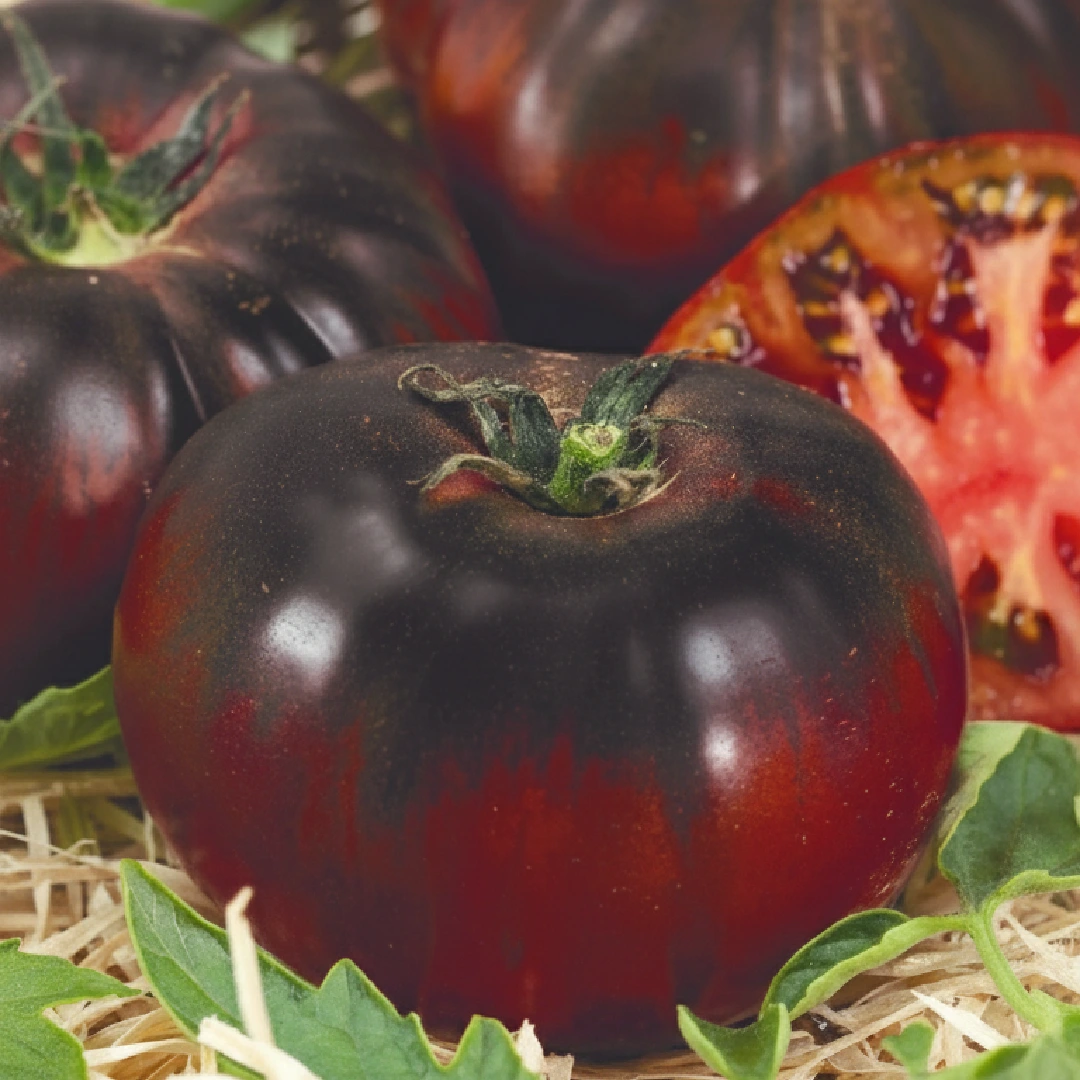
Dark red with almost black shoulders, sweet, juicy and slightly smoky – Black Prince is our answer to the question of why growing your own tomatoes is worth it. This Siberian heirloom is exceptionally cold-tolerant and reliably yields 12–18 kg per plant even in cool summers. The dark colour reveals its high content of lycopene and anthocyanins.
Who is it for? Food lovers, outdoor gardeners and everyone who wants to save their own seed (open-pollinated!). Key facts: Vine tomato · 150–300 g · mid-early · open field & greenhouse → Black Prince (see product cards below)
2. Malinowy Kapturek – the Yield Wonder From Poland
Up to 600 raspberry-pink snacking tomatoes on spectacular trusses 45–75 cm long – Malinowy Kapturek has to be seen to be believed. The small 7–8 g fruits are intensely sweet, the plant is fungus-resistant and thrives outdoors as well as in the greenhouse. The only duty: sturdy support for the heavy trusses.
Who is it for? Families with children, snacking fans and everyone who wants maximum yield from minimal space. Open-pollinated. Key facts: Determinate cherry · 7–8 g · up to 600 fruits · open field & greenhouse
3. Oxheart Orange – the Queen of Beefsteaks
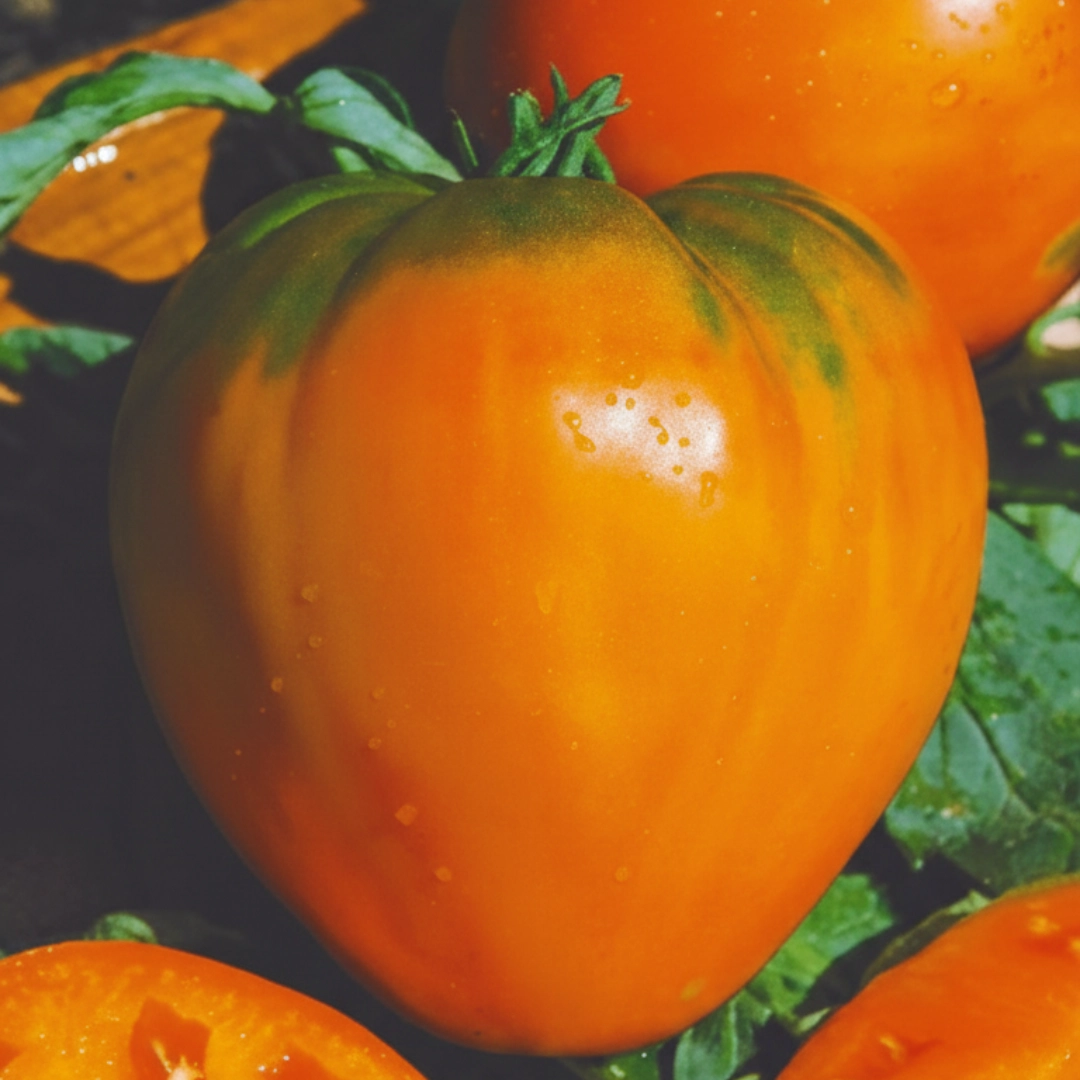
Heart-shaped, bright orange and up to 700 g: Oxheart Orange is an oxheart tomato straight out of a picture book. The creamy, nearly seedless flesh makes it the perfect sandwich and caprese tomato – and delivers velvety sauces without long reduction. Perfectly balanced flavour: fruity-sweet with fine acidity.
Who is it for? Sauce cooks, gourmets and everyone looking for tomatoes with substance. Open-pollinated. Key facts: Vine tomato · 250–700 g · mid-early · pruning & sturdy support required
4. Peardrops – the Hanging Tomato Without the Work
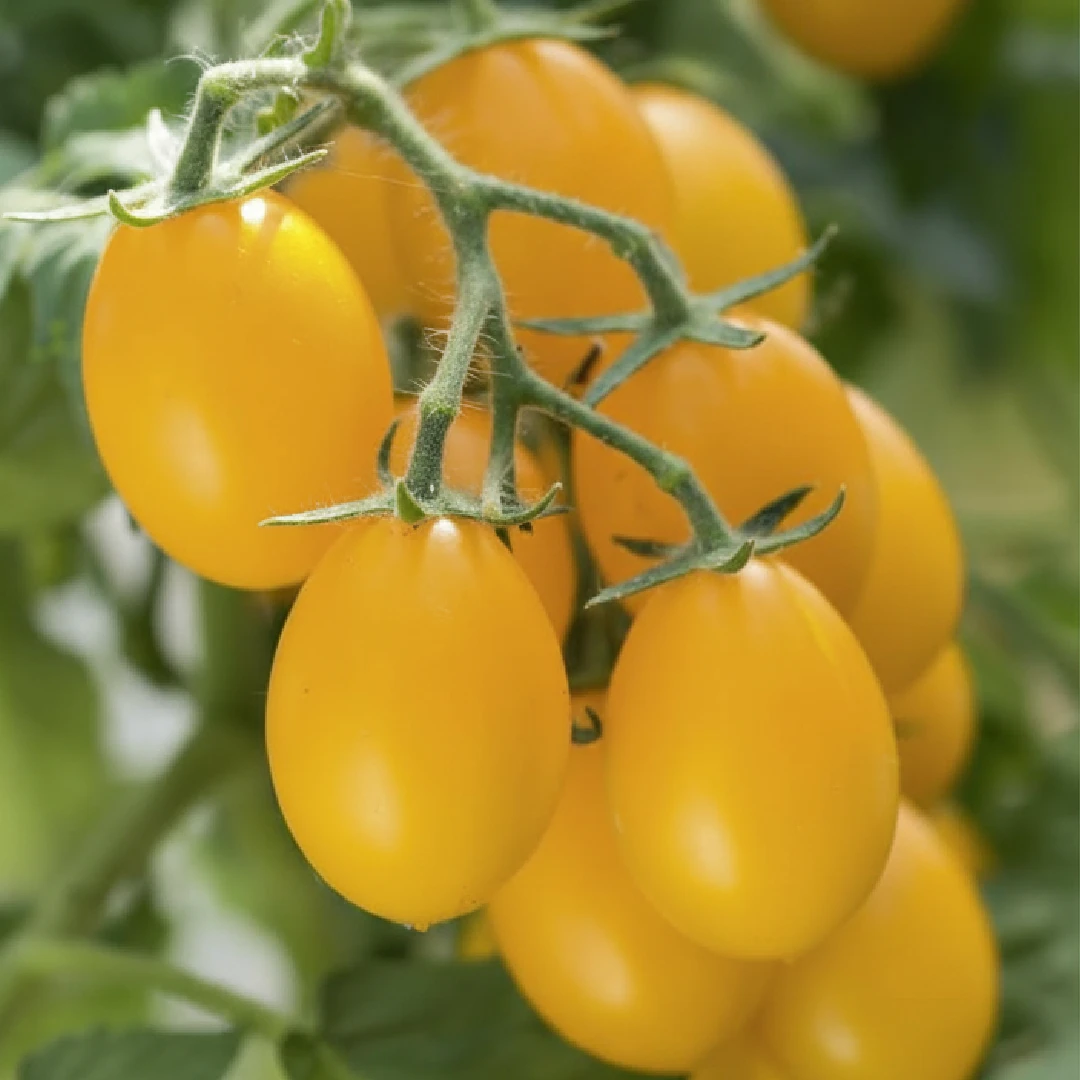
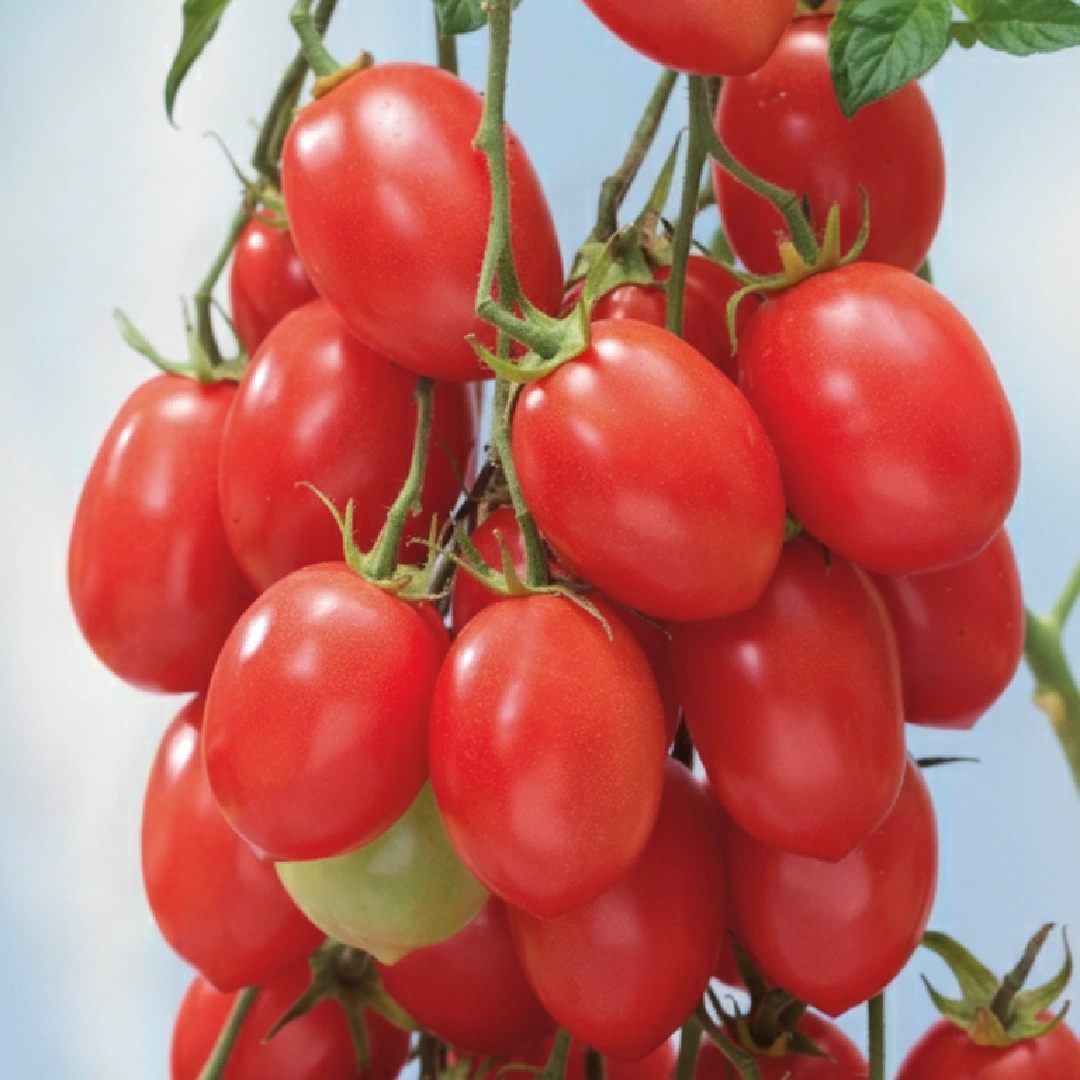
No pruning, no staking – Peardrops cascades picturesquely from hanging baskets and balcony boxes and delivers 2–3 kg of sweet, yellow, pear-shaped snacking tomatoes per plant. The two jobs beginners most often fail at simply do not apply. Just plant, water, snack.
Who is it for? Balcony gardeners, beginners, families – and everyone who wants to harvest in passing. Open-pollinated. Key facts: Trailing tomato · container from 5–10 L · 2–3 kg per plant · very low-maintenance
5. Tolstoi H – the Reliable One for the Greenhouse
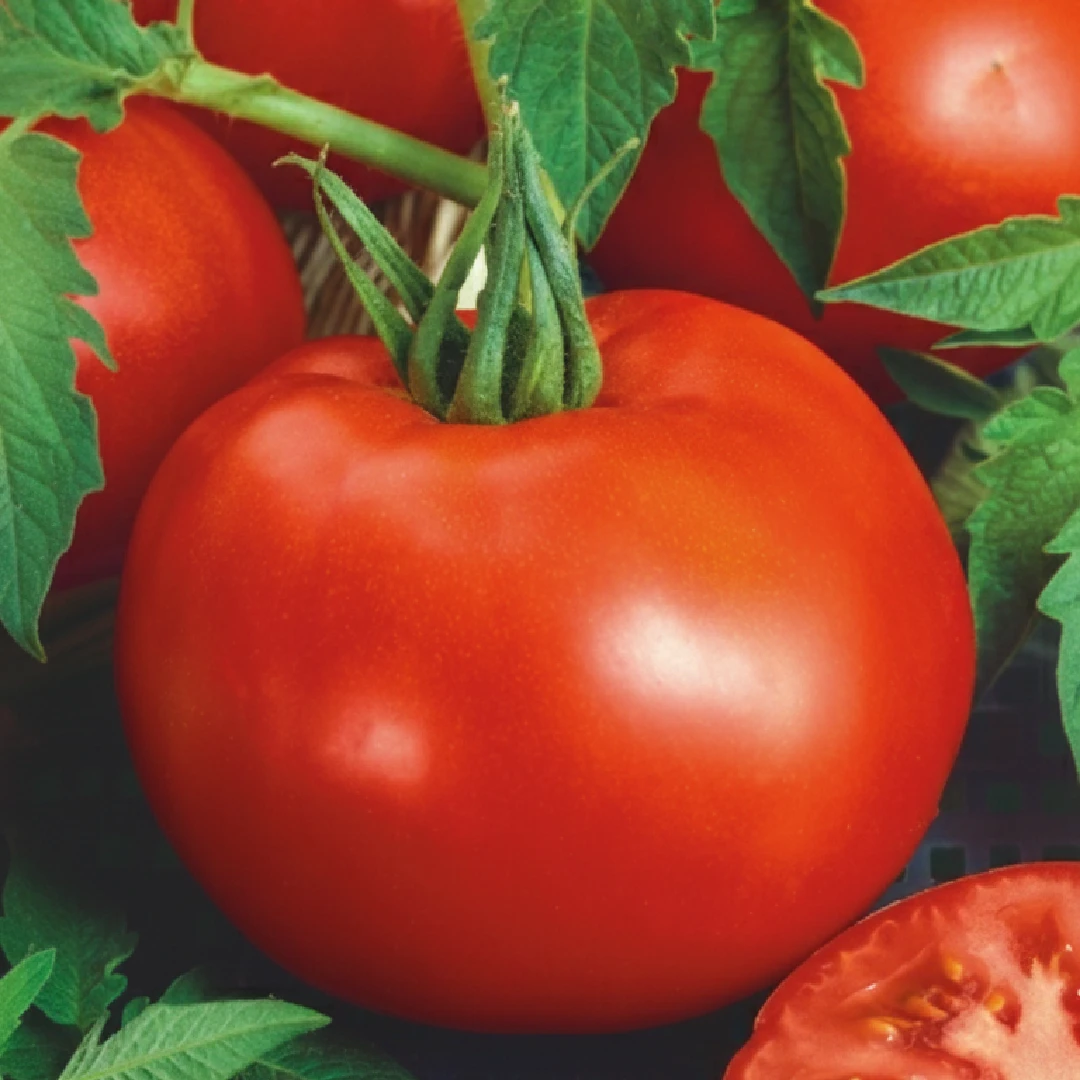
Where sensitive varieties struggle, Tolstoi H simply keeps growing: this modern F1 hybrid brings high disease resistance and delivers deep red fruits of 100–110 g just about 70 days after planting – ripening so evenly that you can pick entire trusses at once.
Who is it for? Greenhouse gardeners and everyone who wants to play it safe. Key facts: F1 hybrid · vine tomato · 100–110 g · approx. 70 days from planting · truss harvest
6. Uragan H – the Open-Field Specialist
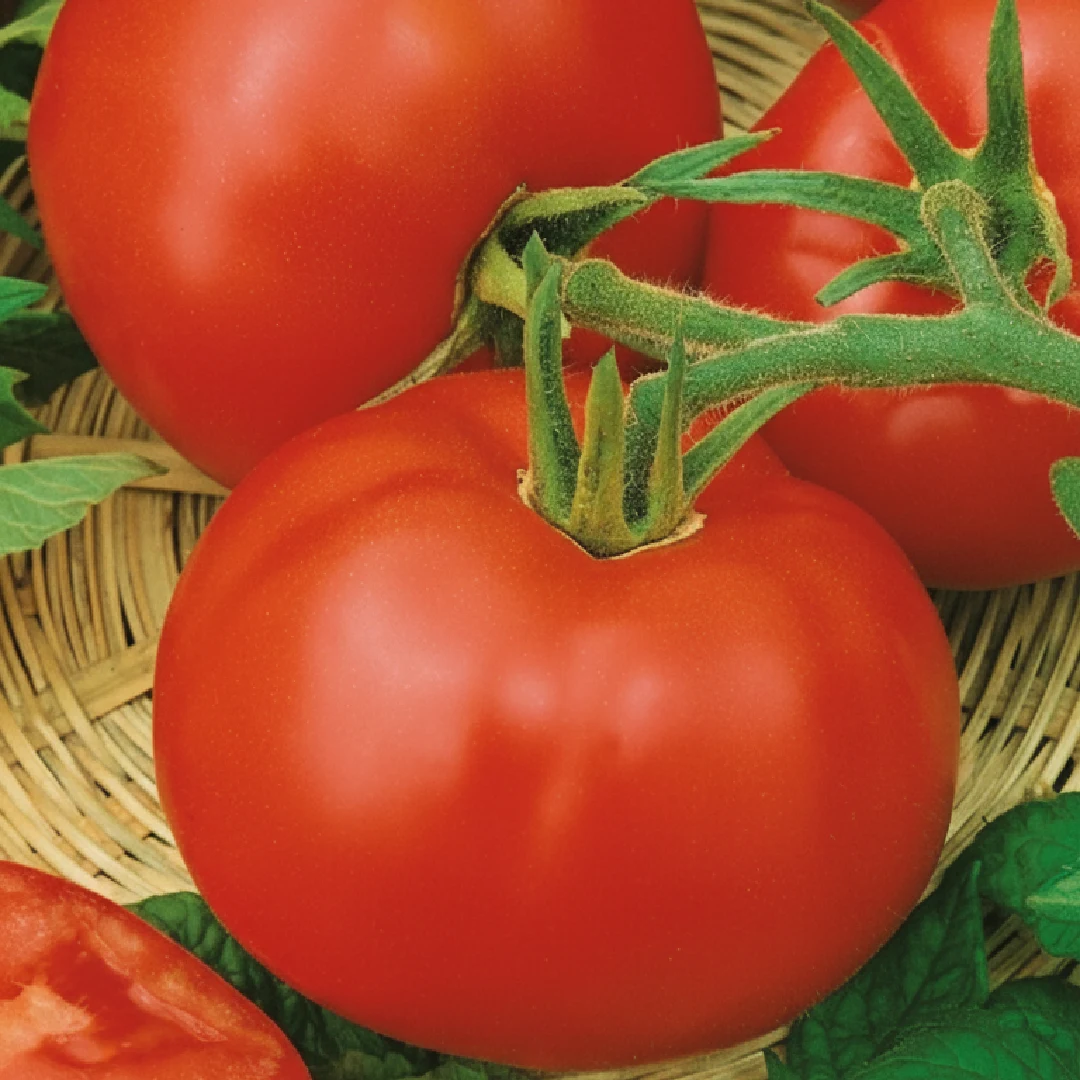
Named after the storm, built for rough weather: Uragan H is extremely early, cold-tolerant and bears crack-resistant fruits (110–135 g) that stay intact even after downpours. Thanks to its earliness you harvest before late blight strikes in late summer – the underrated trump card of outdoor growing.
Who is it for? Outdoor gardeners in cooler regions and areas with unpredictable summers. Key facts: F1 hybrid · vine tomato · 110–135 g · very early · crack-resistant & cold-tolerant
7. Venus – the Balcony and Indoor Tomato
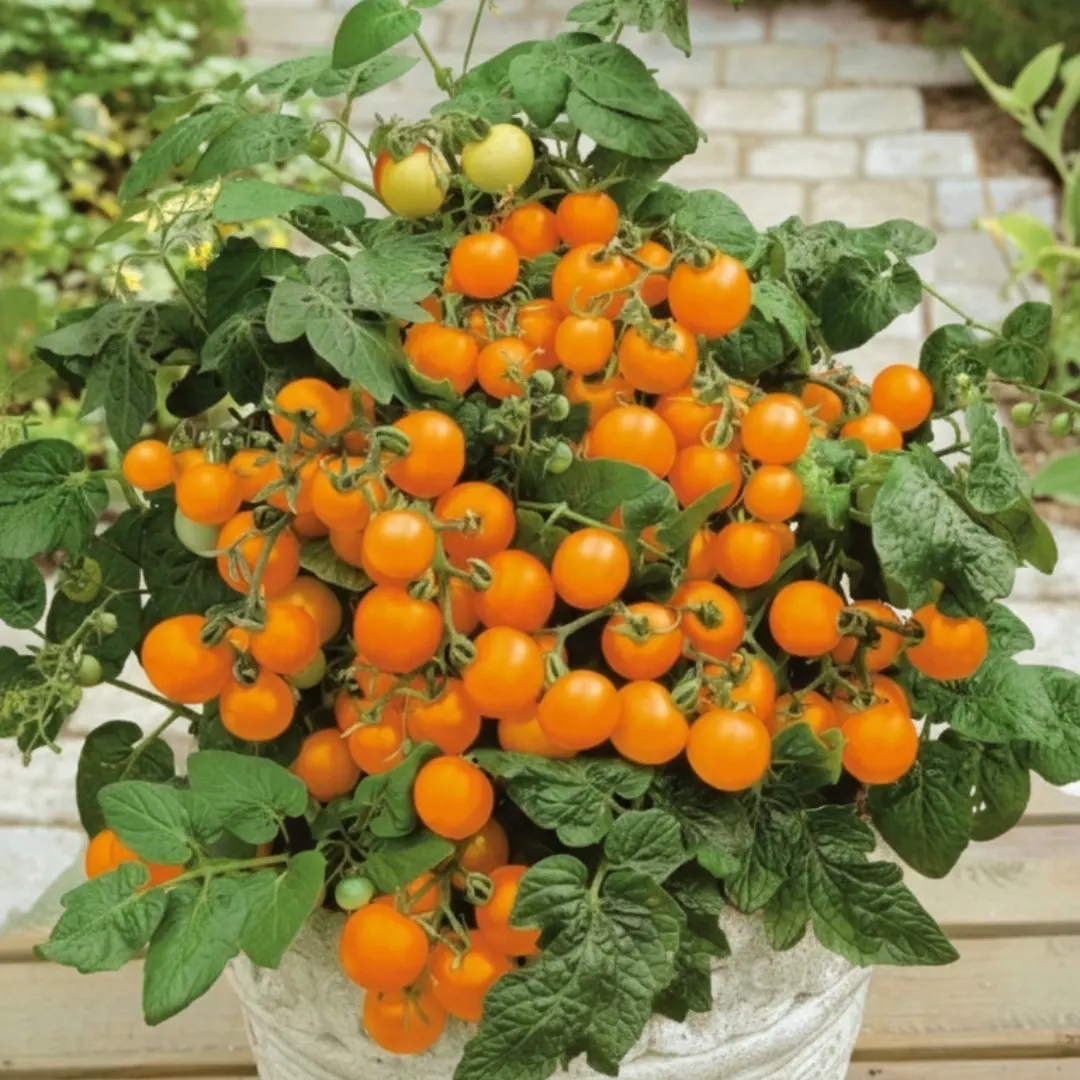
No garden? No problem. Venus stays compact, limits its own growth and thrives in a 5–10 litre pot on the balcony, the patio – and even on a bright windowsill, year-round there. The bright orange fruits (up to 30 g) are rich in beta-carotene and a real eye-catcher among all the red varieties.
Who is it for? Urban gardeners without a garden, windowsill pioneers, beginners. Open-pollinated. Key facts: Determinate cherry · up to 30 g · pot from 5–10 L · also for indoors
Growing Tomatoes: the Essentials From Sowing to Harvest
When do you sow tomatoes?
From late February to early April indoors at 22–25 °C – tomatoes need a warm start. Rule of thumb: sow 6–8 weeks before planting out. Sow too early and you get leggy giants on the windowsill; too late and you give away weeks of harvest.
When can tomatoes go outside?
From mid-May, after the last frost. Tomatoes tolerate no frost – a single cold night can destroy weeks of work. In the greenhouse, from late April. Harden the young plants off outdoors during the day for a week before planting.
Do tomatoes need pruning?
Depends on the variety – which is exactly why it is stated for each one above. Vine tomatoes (Black Prince, Oxheart Orange, Tolstoi H, Uragan H) are pruned regularly: break out the side shoots in the leaf axils while they are small. Peardrops and Venus need none, Malinowy Kapturek only moderately. Pruning directs the plant’s energy into fruit instead of foliage.
How do you water and feed tomatoes correctly?
Evenly and at soil level – never over the leaves; that helps prevent blight. Better to water less often but thoroughly than a sip every day; fluctuations make fruits crack. Feed weekly from flowering – tomatoes are heavy feeders. In pots, doubly so.
Open-pollinated or F1 – which is better?
Both have their place. Open-pollinated varieties (Black Prince, Oxheart Orange, Malinowy Kapturek, Peardrops, Venus) can be propagated from your own fruit every year – the seed stays true to type. F1 hybrids (Tolstoi H, Uragan H) offer maximum uniformity and resistances in return, but their seed segregates in the next generation. Our honest recommendation: choose open-pollinated for independence, hybrid for maximum growing security.
💡 Bed schedule for the tomato year: Late February–April – sow indoors (22–25 °C) · Mid-May – plant out, set supports · June–September – prune & feed weekly · July–October – harvest, snack, preserve · Autumn – save seed from the best fruits of open-pollinated varieties for next year.
Our Conclusion: There Is a Right Tomato for Everyone
Whether an 8-gram snacking pearl or a 700-gram heart, whether windowsill or open field – your variety is among these seven. And if you cannot decide: most of our customers combine one snacking tomato (for daily happiness), one beefsteak (for the kitchen) and one robust outdoor variety (for security).
🍅 All tomato varieties at a glance: Black Prince · Malinowy Kapturek · Oxheart Orange · Peardrops · Tolstoi H · Uragan H · Venus – you will find them all in our shop and in the product cards below.
Still unsure which variety suits your location? Write to us at info@nasch-datscha.de – we are happy to advise you personally.
📖 Related from our blog
- 🍉 The Big Watermelon Guide – the other great heat lover in the bed
- 🍛 Uzbek plov – your tomatoes in achichuk salad
- 🌿 Dill, parsley & co. – the perfect herbs for tomato salad


