

Cucurbits are the most generous plants in the vegetable garden: a single seed becomes a lush plant that supplies you with fruit all summer – often faster than you can harvest. Our range includes five very different members of this family: from the productive zucchini through the rare UFO patisson to the oil pumpkin whose seeds you can snack on straight away, without a hull. This guide shows you which variety suits you and how growing succeeds.
Which Variety Is Right for Me? The Quick Answer
- For beginners & fast harvest: Zucchini Nimba – ready in 45–50 days
- For small gardens & balcony: Zucchini Wanda – compact bush habit
- For the eye-catcher: Zucchini Złoty Cepelin (golden) or Patisson Delikates (UFO shape)
- For pickling & fermenting: Patisson Delikates – harvested young
- For healthy snacks: Pumpkin Olga – hull-less seeds to snack on directly
- Open-pollinated: Patisson, Pumpkin Olga, Zucchini Złoty Cepelin – seed can be saved
The 5 Varieties in Portrait
1. Zucchini Nimba – the Fast Reliable One
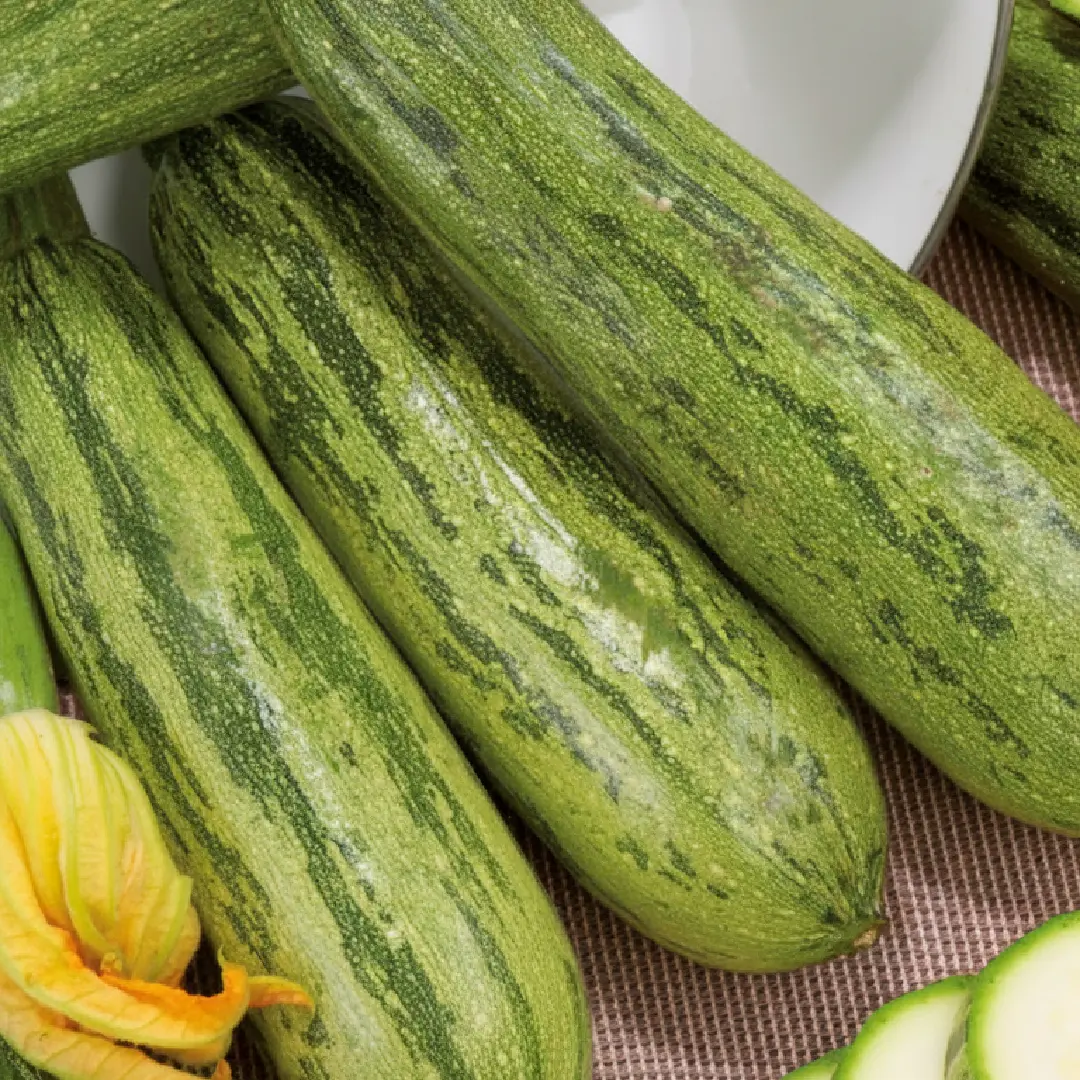
One of the earliest zucchini of all: you can harvest just 45–50 days after sowing. The light green, darker-striped fruits grow remarkably uniform, with firm, mild flesh – ideal raw, pan-fried, grilled or preserved. Two plants supply a family all summer.
Who is it for? Beginners and anyone wanting a fast, abundant harvest. Key facts: Zucchini · ready in 45–50 days · firm & mild · very productive
2. Zucchini Wanda – the Compact One for the Raised Bed
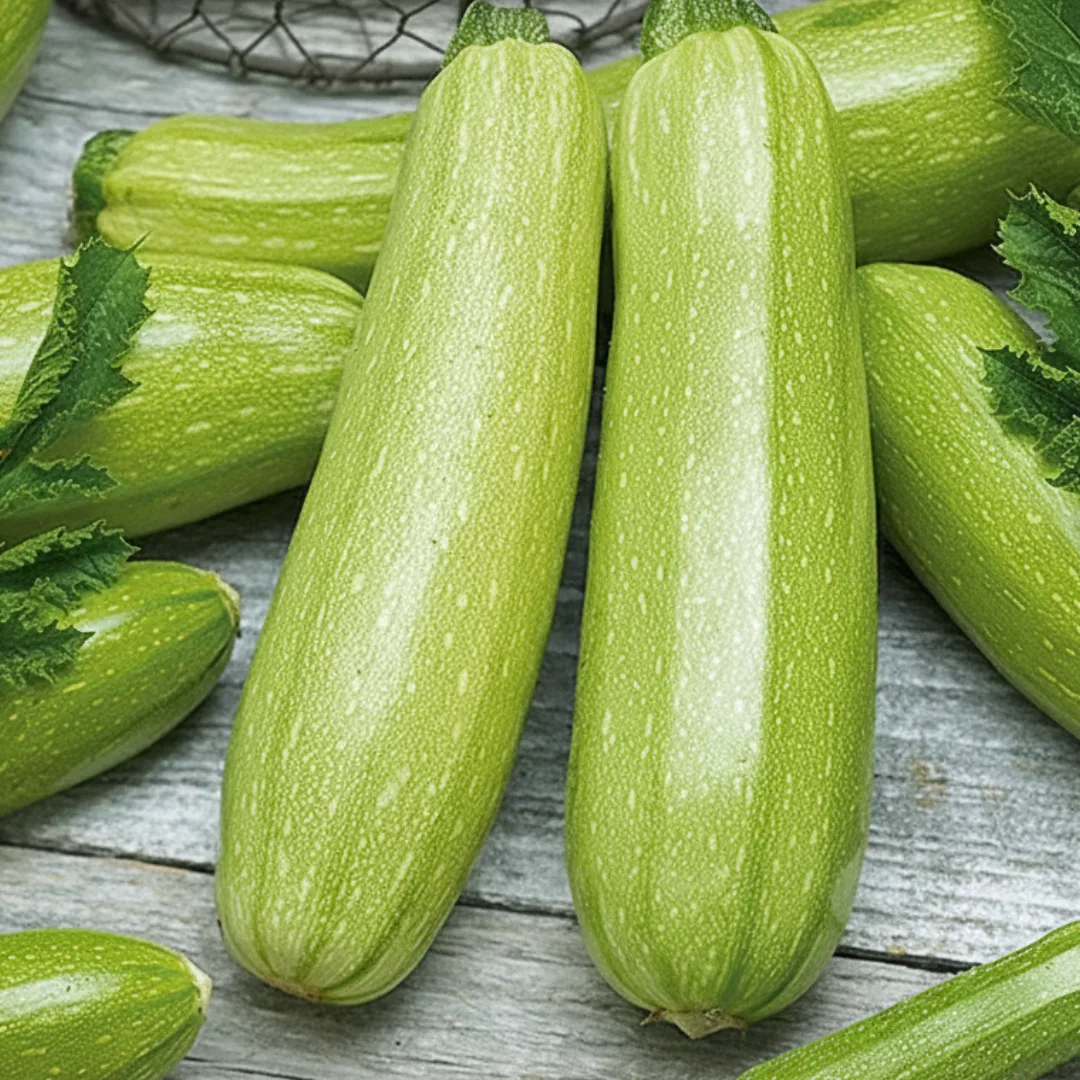
If you have little space, plant Wanda: the compact bush habit needs no long vines and fits even into a raised bed or a large container. The tender green fruits, about 20 cm long, are the kitchen standard for frying, steaming, stuffing and pickling. By the way: the flowers are edible too – stuffed and baked, a delicacy.
Who is it for? Balcony and raised-bed gardeners, small gardens. Key facts: Zucchini · compact bush habit · approx. 20 cm fruits · suitable for containers
3. Zucchini Złoty Cepelin – the Golden Powerhouse
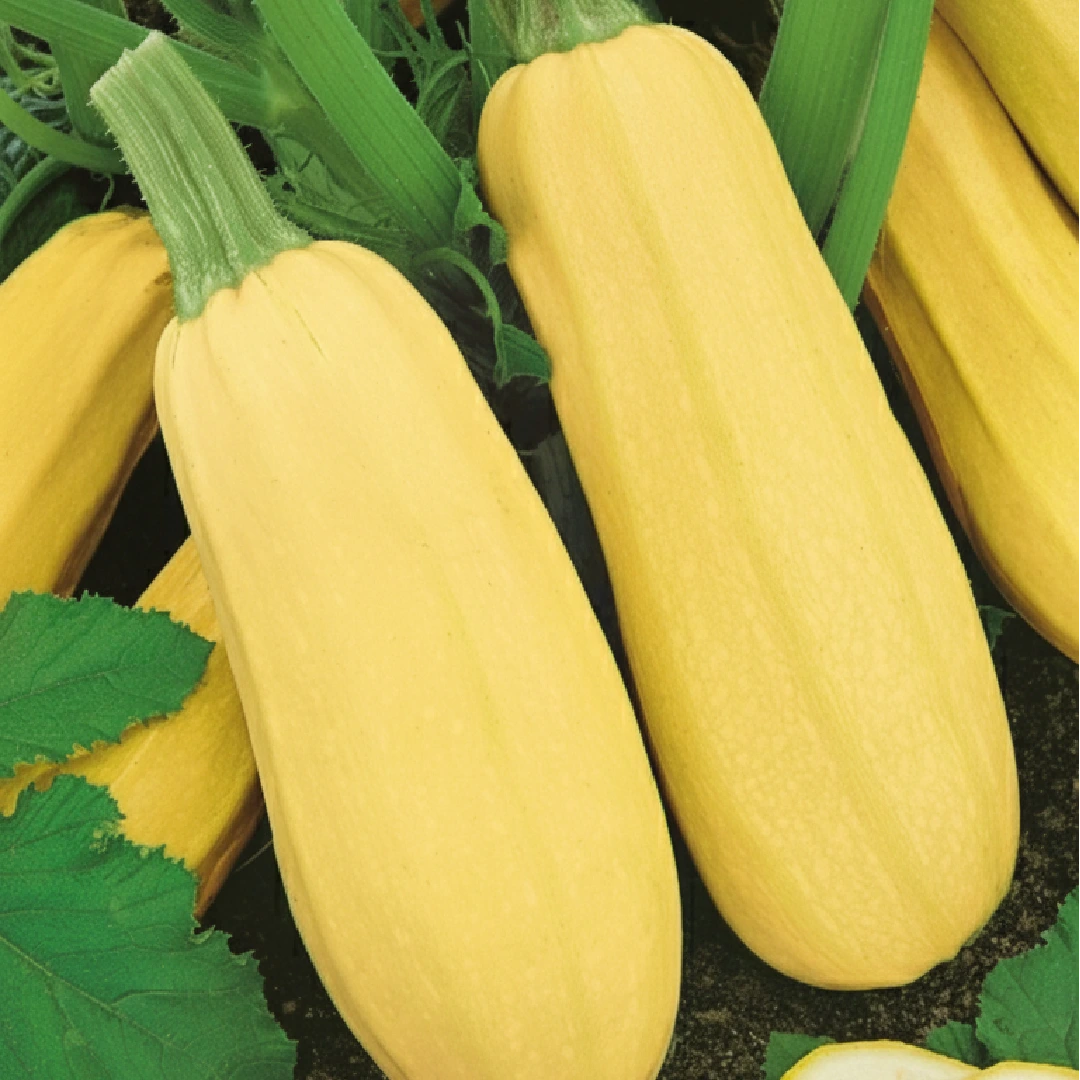
Bright yellow and instantly recognisable on the plate: Złoty Cepelin brings colour to the bed. The flavour is fine, the flesh stays slightly firmer when cooked than green varieties. Its special trait: the more often you pick, the more new flowers and fruits the plant produces. Combined with a green variety, you harvest in two colours.
Who is it for? Anyone who loves variety and bright colours. Open-pollinated. Key facts: yellow zucchini · especially productive with frequent picking · open-pollinated
4. Patisson Delikates – the UFO From the Bed
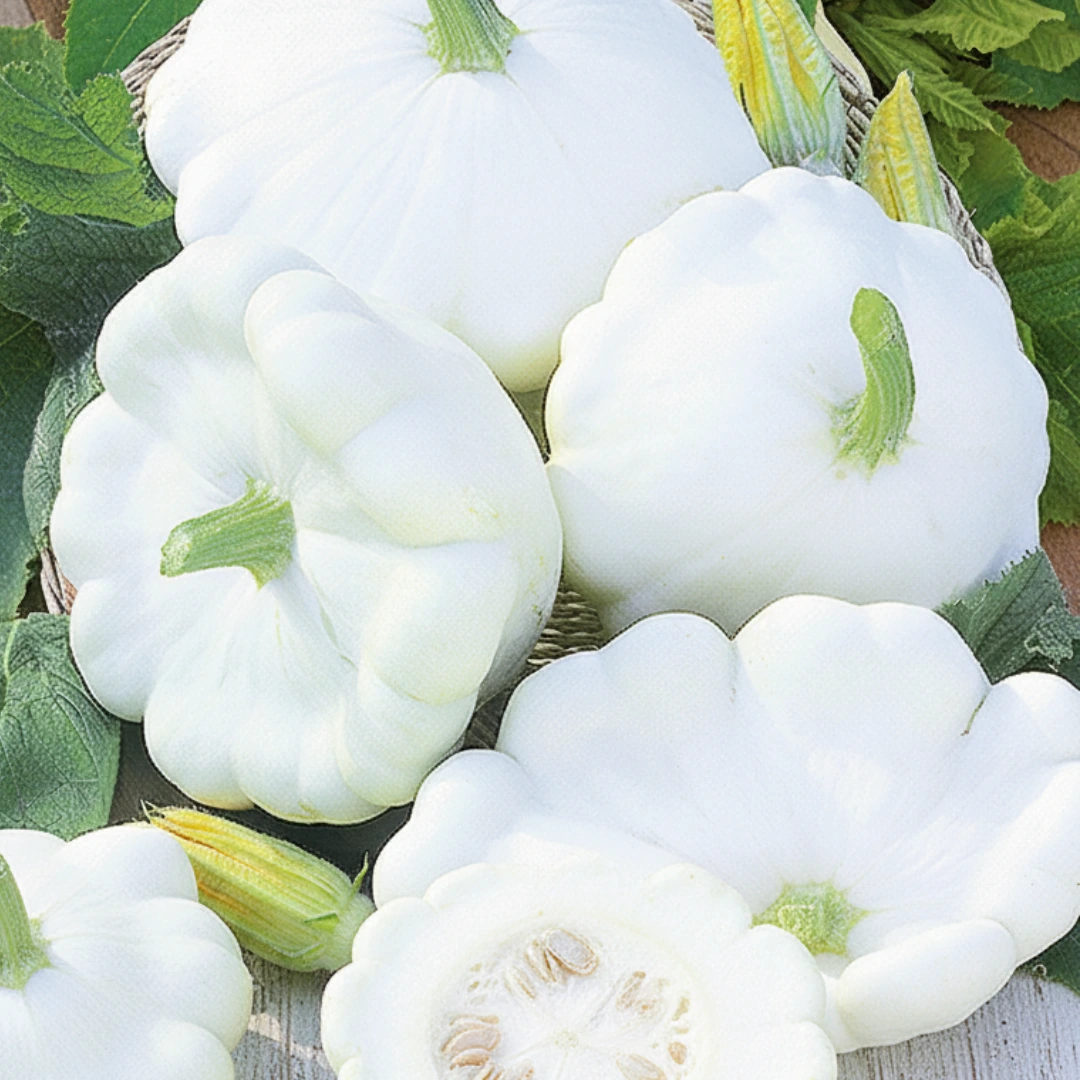
The secret star of the squash bed: patissons are close relatives of the zucchini with flat, scalloped UFO-shaped fruits. In flavour they sit between zucchini and artichoke – firmer in bite, finer in aroma. Harvested small (4–5 cm) they are a delicacy for pickling, larger they are ideal for frying, steaming and stuffing. Delikates also carries valuable mildew resistance.
Who is it for? The curious, preserving fans and anyone wanting to surprise guests. Open-pollinated. Key facts: Patisson · UFO shape · mildew-resistant · young for pickling, large for stuffing
5. Pumpkin Olga – the Hull-less Seed Sensation
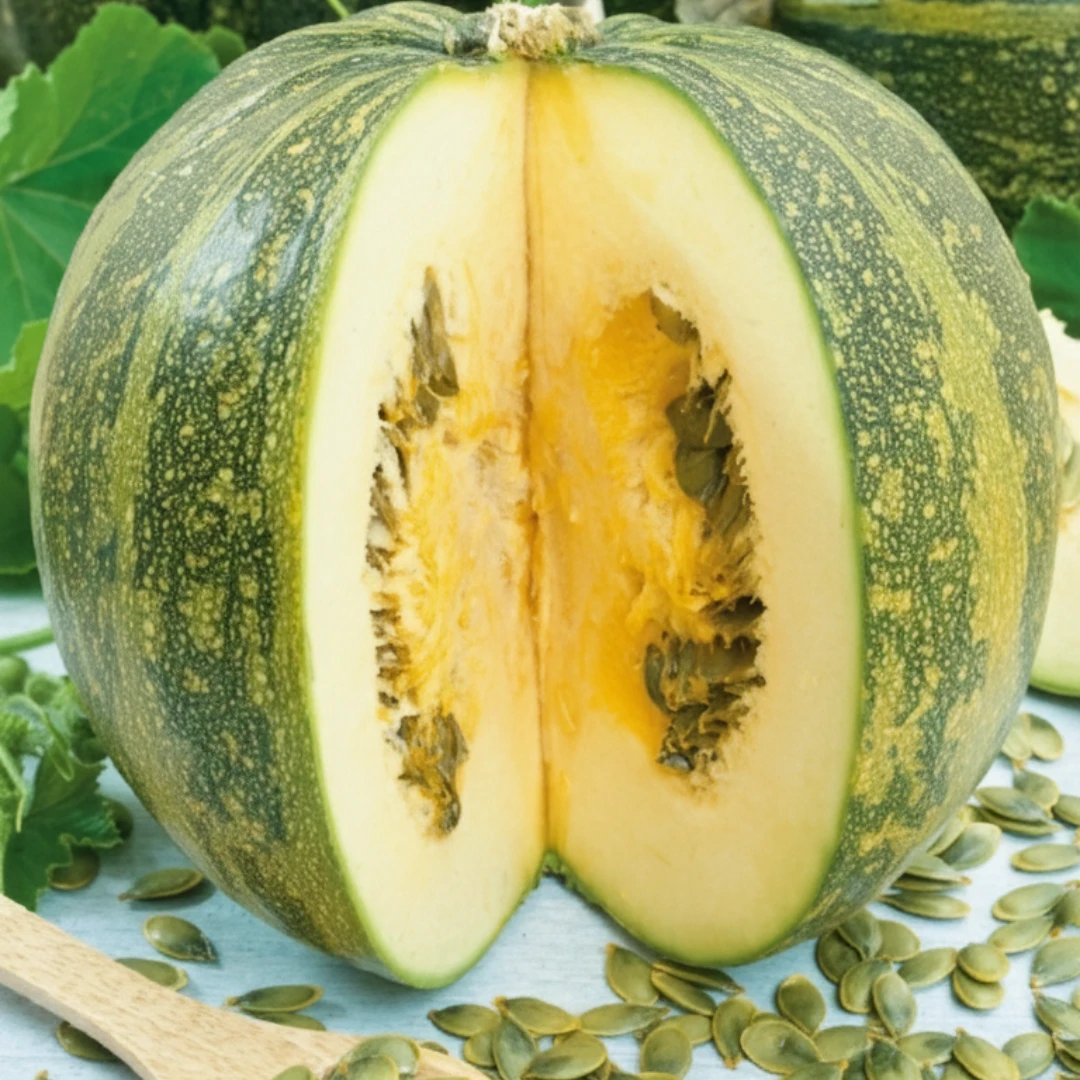
The highlight of this rarity is inside: the large, dark green seeds grow without a hard hull. After washing and drying, you can snack on them directly, roast them or sprinkle them over muesli – your own annual supply of pumpkin seeds, valued especially for their high zinc content. The round fruits turn orange with green stripes in September/October.
Who is it for? The health-conscious, self-sufficient gardeners and seed fans. Open-pollinated. Key facts: oil pumpkin · hull-less seeds · rich in zinc · vining, needs space
Growing Cucurbits: the Essentials
When do you sow zucchini, pumpkin and patisson?
Start indoors from mid-April at 20–25 °C or sow directly from mid-May, after the last frost. Germination is fast, in 5–10 days. Cucurbits are frost-sensitive – starting too early outdoors backfires. For direct sowing, place 2–3 seeds per station and later keep the strongest seedling.
How much space do the plants need?
This is the most important difference: Zucchini Wanda (bush) and patisson manage with little space and fit into a raised bed. Pumpkin Olga, by contrast, vines and needs 1.5–2 m per plant. Plan the bed accordingly – an oil pumpkin can completely overgrow a small area.
How do you prevent mildew?
Powdery mildew is the most common disease of cucurbits in late summer. The best protection: water at soil level rather than over the leaves – dry foliage is the best defence. An airy position also helps. The Patisson Delikates already carries mildew resistance.
Why is frequent harvesting so important?
For zucchini and patisson: the more often you pick, the more the plant bears. Harvest zucchini young at 15–20 cm – that is when they taste most tender, and the plant keeps setting new fruit. If you let a fruit grow into a giant club, the plant stops producing. Harvesting two to three times a week is ideal.
Open-pollinated or hybrid?
Our cucurbits – Patisson Delikates, Pumpkin Olga and Zucchini Złoty Cepelin – are open-pollinated, so you can save seed. Important: cucurbits cross easily with each other. For pure seed, grow only one variety of a species or hand-pollinate deliberately.
💡 Bed schedule for the squash year: Mid-April – start indoors (20–25 °C) · Mid-May – plant out, give the pumpkin plenty of space · June–September – harvest zucchini & patisson 2–3× a week · October – harvest the oil pumpkin, dry the seeds · autumn – save seed from open-pollinated varieties.
Our Conclusion: A Generous Harvest in Any Space
Whether you have little space (Wanda, patisson), want an abundant harvest (Nimba) or something special (golden Złoty Cepelin, hull-less Olga) – the squash family has something for everyone. Our tip: a green and a yellow zucchini plus a few patissons for the preserving jar – that way the harvest is colourful and the pantry full.
🎃 All varieties at a glance: Zucchini Nimba · Zucchini Wanda · Zucchini Złoty Cepelin · Patisson Delikates · Pumpkin Olga – all in our shop and in the product cards below.
📖 Related from our blog
- 🥒 Fermenting crunchy salt pickles – young patissons go into the jar too
- 🍉 The Big Watermelon Guide – the sweet relatives in the squash bed
- 🍅 The Big Tomato Guide – the best bed neighbour
And when your first zucchini glut arrives: send us your best recipe to info@nasch-datscha.de!


